
Mobile Mammography Clinic
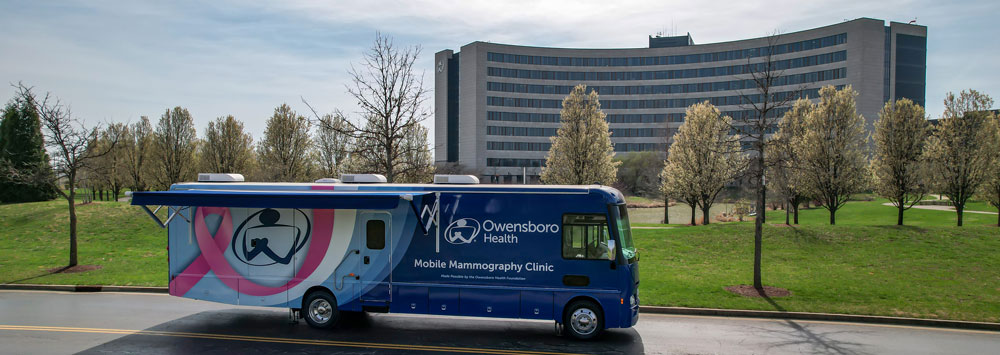
The Owensboro Health Mobile Mammography Clinic delivers fast, convenient 3D mammography across Western Kentucky. We bring high quality screening to workplaces, events and community locations near you.
Convenient Screening, Close to You
We understand how difficult it can be to fit preventive care into a busy schedule. That’s why the Mobile Mammography Clinic offers convenient screening at workplaces and community locations throughout the region.
The American Cancer Society recommends annual screening mammograms starting at age 40. The screening typically takes less than 15 minutes. Just like a hospital‑based mammogram, your images will be read by a radiologist and you’ll receive your results within a few days.
Most insurance plans cover annual screening. Owensboro Health offers grants and financial assistance for people with no insurance.
Walk-ins Welcome
Walk‑ins are welcome. Our team can assist with any required paperwork.
Upcoming Mobile Clinic Events
Open Events (Walk-ins Welcome)
Employee‑only Events
For Employers & Community Organizations
Hosting the Mobile Mammography Clinic is an impactful way to support the health of your employees and community members. Bringing screening directly to your workplace or event helps remove barriers such as travel, time away from work and lack of access to transportation.
There is no cost to reserve the clinic. Requests should be submitted at least 45 days in advance to ensure the best scheduling options, though we will do our best to accommodate shorter windows whenever possible.
To request the clinic, complete the online form or email MobileMammoClinic@OwensboroHealth.org.
Questions? Call 270‑685‑7100 and ask for the Mobile Mammography Clinic director.
Owensboro Health Foundation’s Pivotal Role
The Owensboro Health Mobile Mammography Clinic is made possible through the generous support of the Owensboro Health Foundation and its donors. The Foundation also operates Mammograms for Life, which provides free screening for community members who face financial barriers to preventive care.